


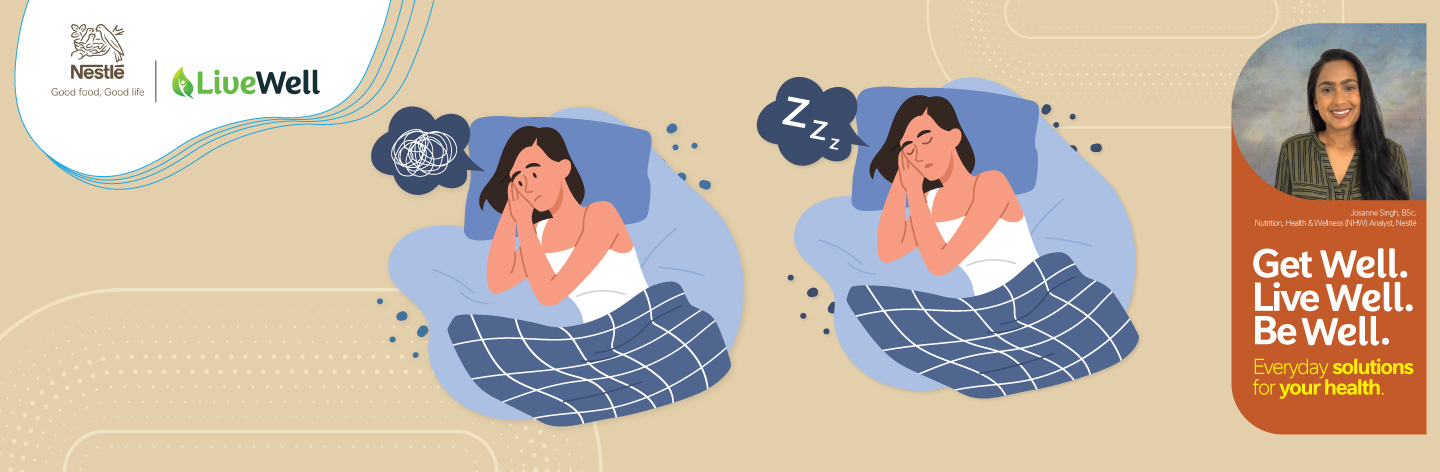
As mentioned in my last post, sleep is a critical component of health that is often neglected. It's common knowledge that adults need to get at least 7 to 9 hours of sleep. However, the number of hours we get is not the only determining factor for a great night’s rest; the quality of that sleep is equally important. To know if you are getting both quantity and quality sleep, it is essential to understand what exactly happens to our bodies when we fall asleep.
Let’s talk about sleep cycles
During the night, our bodies cycle through different stages of sleep, three of which are non-rapid eye movement stages referred to as N1, N2, and N3, and one rapid eye movement (REM) stage. N1 is where you experience very light sleep and it only lasts for a few minutes. In N2, the body begins to enter a deeper sleep as the body temperature continues to drop, heart rate slows down, and muscles continue to relax further. Then comes N3, also known as slow-wave sleep (SWS), the deepest stage of sleep where brain waves are slow, and it’s difficult to wake someone up during this time. Here is where the body does a lot of its restorative work by repairing and regrowing tissues, strengthening our immune system, and building bones to ensure optimal bone health (Patel et al., 2024). For the final stage, rapid-eye movement (REM), as the name suggests, there are eye movements while your eyelids are closed, and here is where all the magical dreams take place. To make sure that you’re not moving around and enacting your wildest dreams, the muscles in the body are temporarily paralyzed to safeguard you. Usually, we go through all four stages multiple times during the night, spending more or less time in each one as the night progresses.
Ask yourself: What’s the quality of your sleep?
Think about your sleeping patterns now. Are you falling asleep quickly every night, or do you toss and turn for quite some time before dozing off? Are you waking up multiple times during the night? When you do wake up, are you falling back asleep within 20 minutes or less? Do you feel well-rested when you wake up the next morning? Based on these questions, it’s easy to see that while we can set aside the hours to sleep, if we do not actually sleep well, we will not reap all, or at least not most, of the great benefits associated with sleep.
Insufficient sleep can be broadly defined as acute, where there is a reduction in sleep lasting for less than a week, and chronic, where it occurs for three months or more (Broussard and Klein, 2022). It's normal to have a poor night’s sleep ever so often; however, if this continuously happens, you may want to start digging deeper to figure out the reason why.
What is impacting consistent sleep quality for you?
Stress and Anxiety
Sometimes we procrastinate to get things done and wait until the absolute last minute to speed through and finish. While for some individuals, the pressure of the deadline somehow helps them lock in and produce top-quality work without affecting other areas of their lives, this may not be the reality for others. The pressure of the deadline, coupled with procrastination, can actually result in some individuals becoming anxious, which can affect their ability to fall asleep. You might find yourself wide awake in bed, thinking about all the work that you’re yet to do that’s probably due the next day. This is just one example of a scenario where you’re unable to shut down your brain—as it is highly stimulated—to unwind and feel fully relaxed enough to fall asleep. Sometimes, life may throw stressful situations your way, making it difficult to cope, and this can also leave you tossing and turning at night, thinking about it, replaying the situation, imagining different outcomes, and trying to figure out a way forward.
Sleep Disorders
While there are some factors that are within your control to positively contribute to your sleep quality, there may be others that require recognition, diagnosis, and consideration of possible treatment options. Oftentimes, sleep disorders go undiagnosed, as individuals may not be aware of them unless pointed out by a caregiver or someone sleeping nearby. Some of the sleep disorders include sleep apnea, restless legs syndrome, and narcolepsy.
Among the disorders listed, sleep apnea is one of the most common and is a condition where your breathing stops and resumes while you sleep. This may result in snoring or gasping for air as the body tries to compensate for this and get the required oxygen. Two common types are obstructive sleep apnea (OSA) and central sleep apnea. The main contributor to obstructive sleep apnea is obesity, as fat deposits around the neck can result in restricted airflow when asleep as the upper airway becomes blocked. In central sleep apnea, there is a lack of communication between the brain and the muscles responsible for breathing. For diagnosis, a sleep study may be required, and treatment may include lifestyle changes, sleeping devices such as continuous positive air pressure (CPAP) machines, or, in some cases surgery.
While acute insufficient sleep can result in temporary discomfort and fatigue, chronic insufficient sleep can have long-lasting negative effects on our health. If any of the issues above resonate with you, please reach out to your healthcare provider to discuss these further and determine a plan of action to resolve them. Remember, sleep is a top priority—not just counting the numbers, but ensuring you get high-quality sleep!
- Patel, Aakash K., Vamsi Reddy, Karlie R. Shumway, and John F. Araujo. "Physiology, sleep stages." In StatPearls [Internet]. StatPearls Publishing, 2024.
- Broussard, Josiane L., and Samuel Klein. "Insufficient sleep and obesity: cause or consequence." Obesity 30, no. 10 (2022): 1914-1916.